
Odd Fellows

My dad’s 81-year-old niece tells a poetic account of my ancestor’s arrival to America: he fled after the Jacobite Rebellion of 1745 to the Carolinas but would’ve returned to see his dying mother one last time if he hadn’t arrived at the dock too late and missed his ship. In Cousin Jeanne’s words, he swore with angry tears never to return to Scotland again. This may be why I’m never late to anything. Some ancestral instinct kicks in and the tardy minutes feel like ocean fathoms.
Charles McGregor left Scotland after trying with many other rebels to dethrone King George II. There’s a chance he was exiled to the Carolinas as an indentured servant. This was the fate of many Jacobites who were not executed. Family lore agrees that he left Scotland as an enemy of the crown, but declares that he fled in his own ship. When I was in college I visited my local library and found a black book with a title in gilded lettering. It had an index with my ancestor’s name in it and a corresponding page that told of his owning a ship. The library is gone now, and I can’t remember the title or author of the book. There is no corresponding evidence of my ancestor’s ship anywhere on the massive world wide web.
All versions of McGregor’s life converge into his eventually marrying the daughter of a prominent landowner in North Carolina, having ten children, and naming his first two sons Robert and George. I’d like to believe Robert was a nod to one of the heroes of that Scottish rebellion: Rob Roy. George went on to join the American Revolution at the age of 17. From George down to me, things become a little more verifiable. Documentation starts to pick up as names also turn more creative. George begat Joseph who begat Charles Thomas who begat Moss who begat Demps who begat Cabell who begat me and my sister.
Lately I’ve been struck by the realization that this particular branch of the family line will end with my generation. My sister and I are both unmarried. My “children” are my students, and though I do love them, they ship out every May after graduation and it’s common to never see them again. That feels like a mother-child relationship of another kind. I googled “What animal has a rather impersonal relationship with her young?” and the first results were “Salmon, cod, herring, and tuna.”
As for my sister, her children are her pugs. She has two—male and female—that live with her every other week because she shares joint custody with her ex-boyfriend, Mark. They swap the dogs out every Saturday. My sister packs up their things in a little bag and refers to herself as a “pug step-mom.” The female pug is Mark’s from a previous relationship. “But she thinks of you as her actual mother,” Mark once told my sister. “That was the nicest thing he ever said to me,” my sister then told me as we ate boiled crawfish. Crawfish also show “limited parental care” to their young.
Charles McGregor being an indentured servant is forever lost to speculation; however, his grandson was unequivocally a slave owner. I recently found a historic registry form for Bannerman Plantation in Tallahassee, Florida, the home of my great-great-great uncle (son of George, veteran of the American Revolution.) At the time of the application, the plantation was owned by one Dick Zeigler, and the photos included in the application show a two-story Greek Revival house. It seems much of it was altered by Dick and his wife, Terry. Going through the photos wasn’t exactly a step back into another century but more of a trip-and-fall into the 90s.
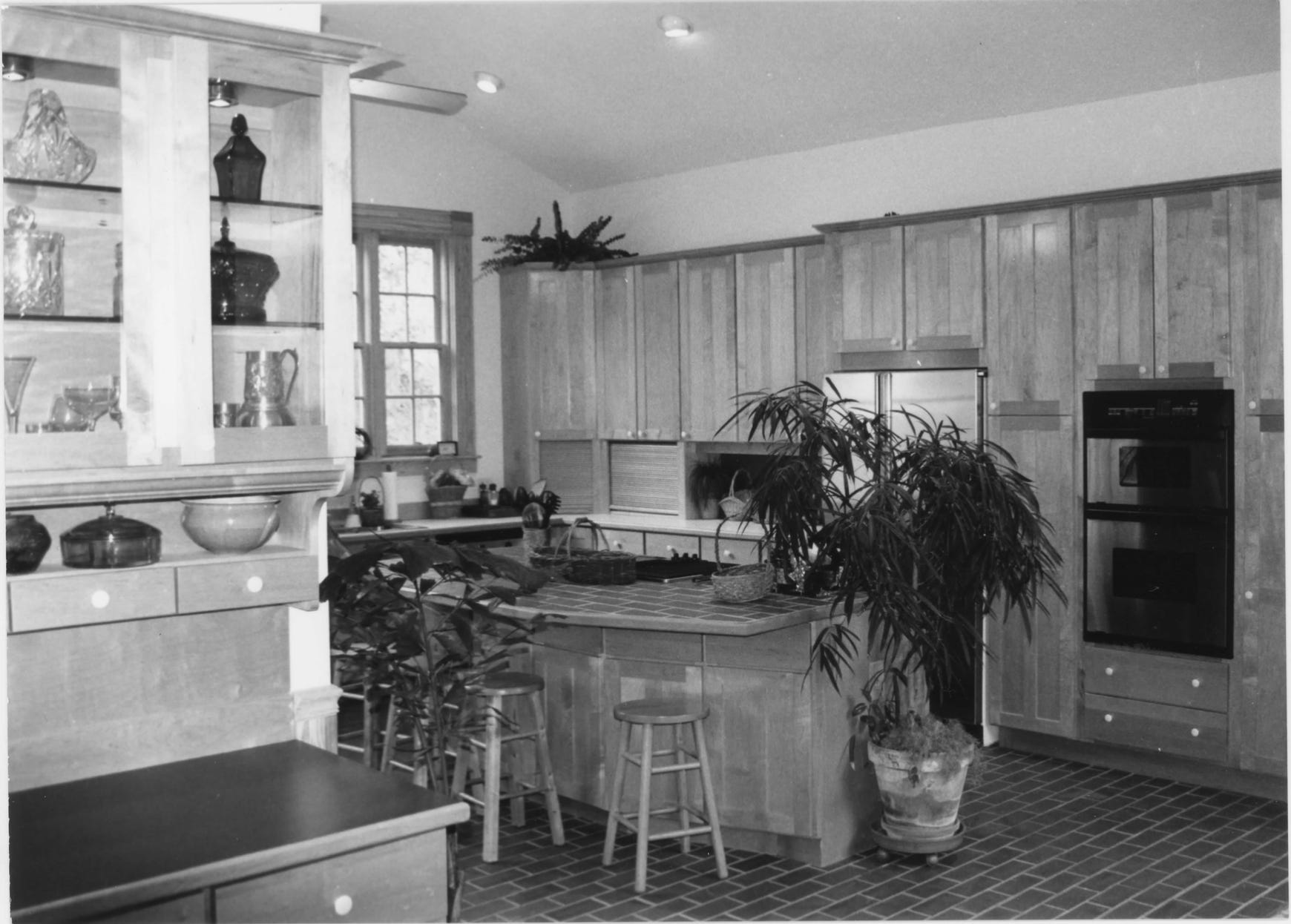
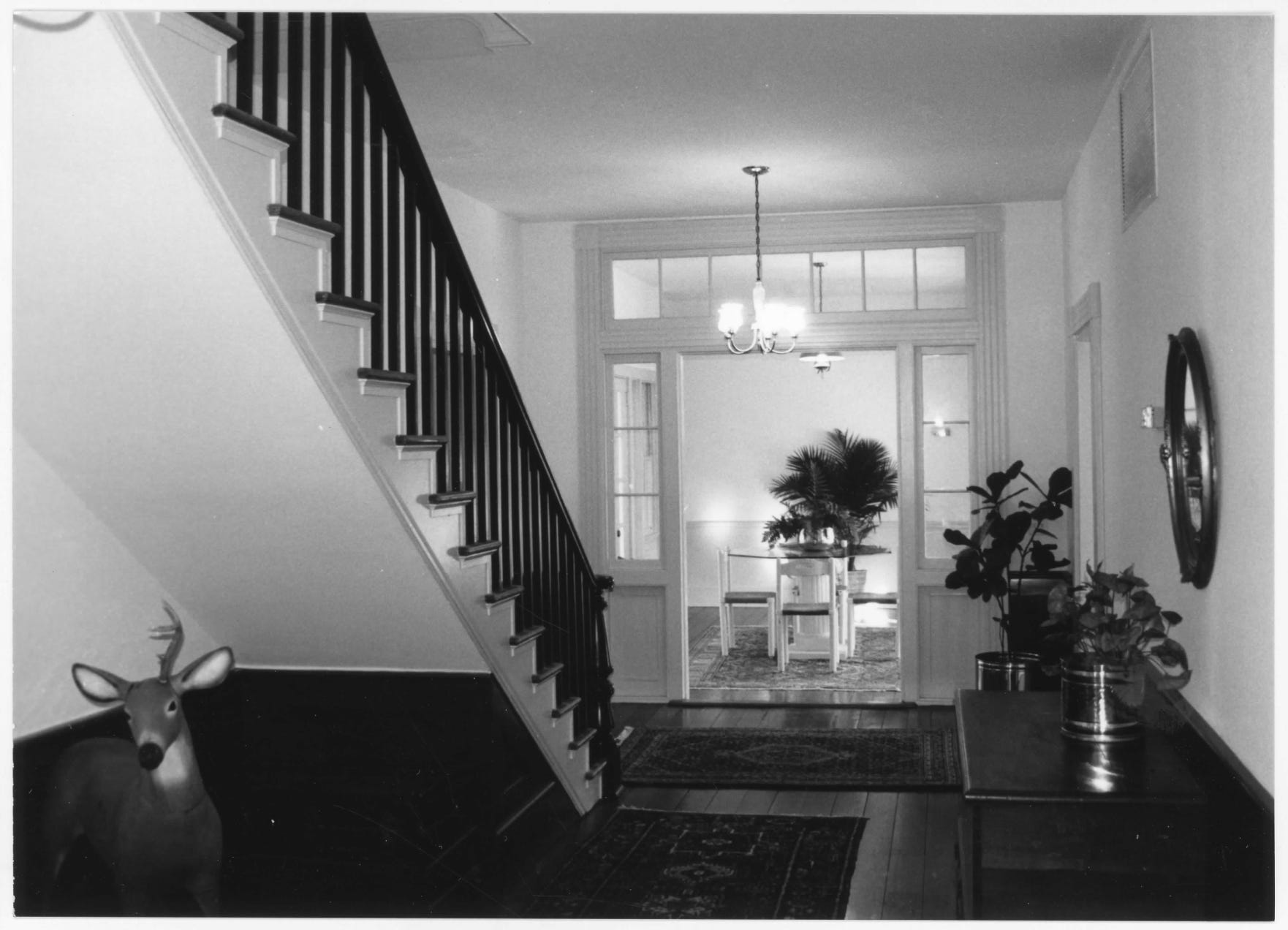
I read the whole 66-page application, which struck me as well-written and thoroughly researched. An historian named Gwendolyn, as she’s named in the application, must’ve spent months compiling it. Part of her research involved studying Charles Bannerman’s diary, which is in itself a testimony to her dedication. I also read it and discovered that every page follows this similar cadence:
May 22: Began to hoe cotton
May 29: Finished plowing cotton
July 15th: Caterpillars making their appearance
Sept 16th: Caterpillars finished eating cotton
While collecting data, Gwendolyn took a short walk west from the house to a little place marked in one of her maps as the plantation’s “African-American cemetery.” Her paperwork states that there is only one marked grave, which she photographed.
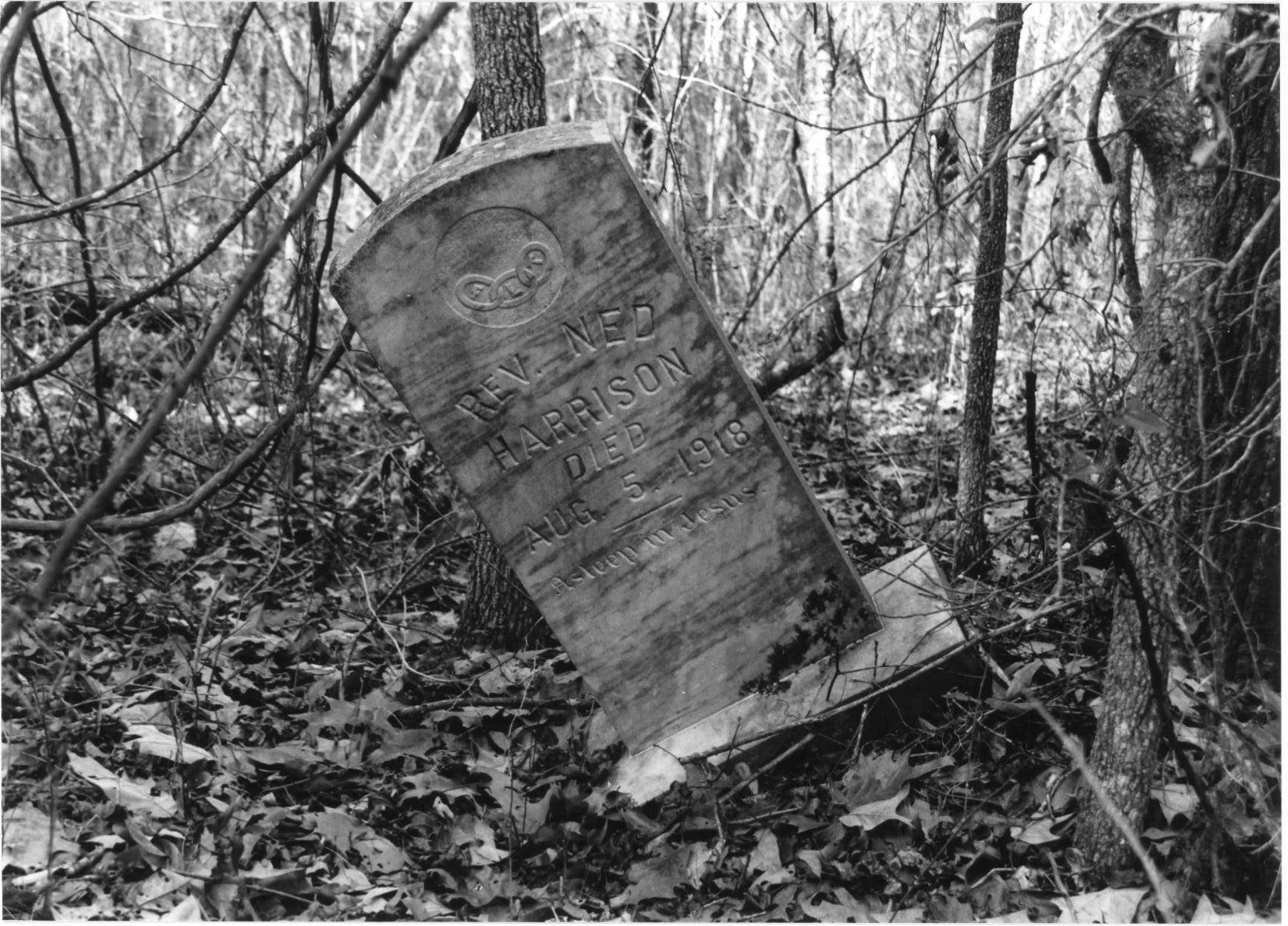
I searched the world wide web for Ned Harrison, a freed man but likely once a slave, but found no record of his birth. The only unique feature of the headstone—aside from it looking like it will fall over any minute—is the FLT symbol etched in chain links at the top: “Friendship, Love, and Truth,” the motto of the Grand United Order of Odd Fellows.
My first year at Jackson Academy, I taught 9th grade on the second floor of the library in a terrarium-like classroom with glass on all sides. I could see the head of school coming from far away. This was also his first year at the school, and so we were both more like fellow newbies rather than boss and employee. Months earlier in my interview he said, “Do you have any questions? Not that I can answer them.” His office was decked out in artifacts from the Civil War.
I watched him make his way towards me at a swift pace, threading his way through the biographies and periodicals of our library, which is about 1/8th of the size it used to be. He came to my door, poked his head in, and asked to speak with me privately.
“You’re not in trouble,” he said. He reached into his coat pocket where most men would keep their comb or wallet and pulled out a little baggie. On the outside, “Jacobite Rebellion: 1745” was scrawled in Sharpie. His little gift reminded me that I have this tendency to talk to about people I know a little bit about and thereafter largely romanticize. I feel them calling me to make something of my life that is equitable to surviving warfare. To my 9th graders craning their necks to see why I was called out, it could very well have looked like we were conducting a drug deal. The contents were even white. But it was just a little lead musket ball that had oxidized over the years and developed the hoary patina of an old man.
Amazing, as always. The photo of the fake deer with one antler is particularly perfect.
Oh cool, my mom's side of the family were all McGregors with the last name King (changed during the 160 years it was illegal to be a McGregor). So you, me, Rob Roy, and Ewan are all some distant cousins, it seems.